In September, I binged The Summer I Turned Pretty on Prime Video, then got hooked on Stranger Things Season 5 on Netflix in November. When I checked my bill, I realized both subscriptions cost nearly $450 a year—with Netflix alone at almost $290.
If you're torn between Netflix and Prime Video, you're not alone. Recent data shows that over 86% of users subscribe to at least two paid streaming platforms.
To help you decide, I've compared Netflix and Prime Video across content, pricing, and user experience. This guide will help you find the best streaming service for your needs.
Netflix vs. Prime Video: Quick Overview
My take: Netflix wins on content and experience. Prime Video wins on value and bundled perks.
Netflix dominates with blockbuster originals like Stranger Things and Squid Game, plus a razor-sharp recommendation algorithm and polished interface. Prime Video offers fewer originals but starts cheaper, includes 4K in all plans, and bundles perks like free shipping, Prime Music, and more.
Which should you choose? Let's break it down.
Feature | Netflix | Amazon Prime Video |
Starting Price | $7.99/month | $8.99/month |
Video Quality | 1080p (Standard), 4K on Premium | 4K UHD on all plans |
Content Library | ~17,000 movies & shows | 20,000+ movies & 2,700+ shows |
Original Content | Stranger Things, Squid Game, The Crown | The Marvelous Mrs. Maisel, The Boys |
Release Schedule | Full seasons dropped at once | Weekly episode releases (most shows) |
User Interface | Smart algorithm, skip intro, 5 profiles | X-Ray for cast info, 6 profiles, occasional lag |
Extras | Netflix mobile games | Prime benefits: free shipping, music, reading, 100+ add-on channels |
Ads | Ad-free on Standard/Premium, ~4-5 min/hour on Basic | Light ads by default, $2.99/month to remove |
Netflix vs. Prime Video: Subscription Pricing
Netflix Pricing
Netflix has raised prices multiple times in recent years. Here's the 2026 U.S. pricing:
Plan | Monthly Price | Video Quality | Audio | Screens | Downloads | Ads | Notes |
Standard with Ads | $7.99 | 1080p | 5.1 | 2 | 15 titles/device/month | 4–5 min/hour | Limited library due to licensing |
Standard | $17.99 | 1080p | 5.1 | 2 | 100 titles/device | None | Full content library |
Premium | $24.99 | 4K HDR + Dolby Vision | Dolby Atmos | 4 | Up to 6 devices (100 titles each) | None | Best video and audio quality |
The main differences among Netflix's subscription plans:ad-supported plan has limited content and only 1080p; Standard offers ad-free streaming with full library access; Premium delivers 4K HDR, Dolby Atmos, and up to 4 simultaneous streams—ideal for families.
Prime Video Pricing
Amazon Prime Video keeps it simpler and more affordable:
Plan | Monthly Price | Video Quality | Audio | Screens | Downloads | Ads | Notes |
Prime Video | $8.99 | 4K HDR (all plans) | 5.1 (limited Atmos) | 3 max (2 per title) | 15–25 titles | Light ads included | Video streaming only |
Amazon Prime | $14.99/month or $139/year | 4K HDR | 5.1 / limited Atmos | 3 max (2 per title) | 15–25 titles | Light ads included | Includes free shipping, Prime Music, Gaming, Reading |
Ad-Free Add-On | +$2.99/month | — | — | — | — | Removes ads | Must add to either plan above |
Prime Video Channels | $2.99–$14.99/month per channel | Varies by channel (mostly HD, some 4K) | Varies | 3 max (2 per title) | 15–25 titles | Varies by channel | Subscribe to Max, STARZ, MGM+, Crunchyroll, etc. |
Key advantage: For just $8.99/month, you get 4K HDR streaming and offline downloads. To get the same 4K quality on Netflix, you'd need Premium at $24.99/month—nearly three times the cost.
Netflix vs. Prime Video: Free Trial Policy
As of 2026, Netflix has officially discontinued its free trial. While some regions previously offered a 30-day trial, new subscribers in the U.S., Europe, and Asia must now pay upfront to start watching.
Prime Video, however, still offers free trials for new users. Amazon Prime typically provides a 30-day free trial, giving you full access to Prime Video plus all member benefits like free shipping and Prime Music during the trial period.
Amazon also offers additional discounts, such as a student plan with 6 months at 0.99/month, then 50% off regular pricing—making Prime Video even more accessible.
Pro tip: Want to save even more? Trusted platforms like GamsGo offer subscription services that can reduce Netflix Premium to around 25% of the official price and Amazon Prime Video Account to roughly $2/month. For budget-conscious streamers, these third-party options are worth considering.
Netflix vs. Prime Video: Content Library Comparison
Beyond pricing, the real question is whether the content justifies the cost. Overall, these platforms excel in different areas: Netflix leads with original content and prestige series, while Prime Video wins on sheer library size.
| Netflix | Amazon Prime Video | |
| Global Reach | 190+ countries/regions | 240+ countries/regions |
| Library Size | ~17,000 movies & shows | 20,000+ movies & 2,700+ shows |
| Original Strength | Global leader, multiple cultural phenomena | Late start but growing fast: The Boys, The Marvelous Mrs. Maisel |
| Genre Strengths | Originals, documentaries, anime, kids content—all balanced | Massive movie library, comedy & kids animation (Viacom licensing) |
| Sports Streaming | WWE RAW starting 2026 | NFL Thursday Night Football, AEW, NBA (2026–26), etc. |
| Release Strategy | Full seasons dropped at once | Most shows release weekly |
| Hollywood Power | — | Acquired MGM: James Bond, Rocky franchises, etc. |
Netflix's Edge: Original Content Dominance
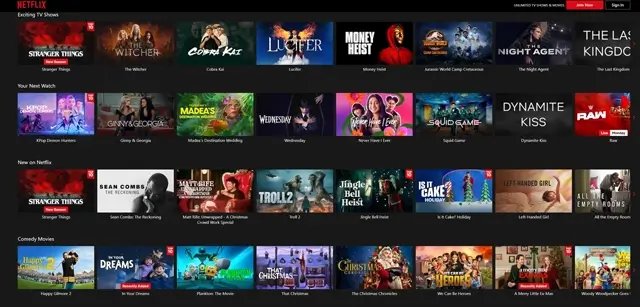
Netflix's advantage is crystal clear: it has the world's strongest original lineup, producing new hits year after year. Stranger Things, The Crown, Black Mirror, Money Heist, and Squid Game have become cultural phenomena, cementing Netflix's leadership in original programming.
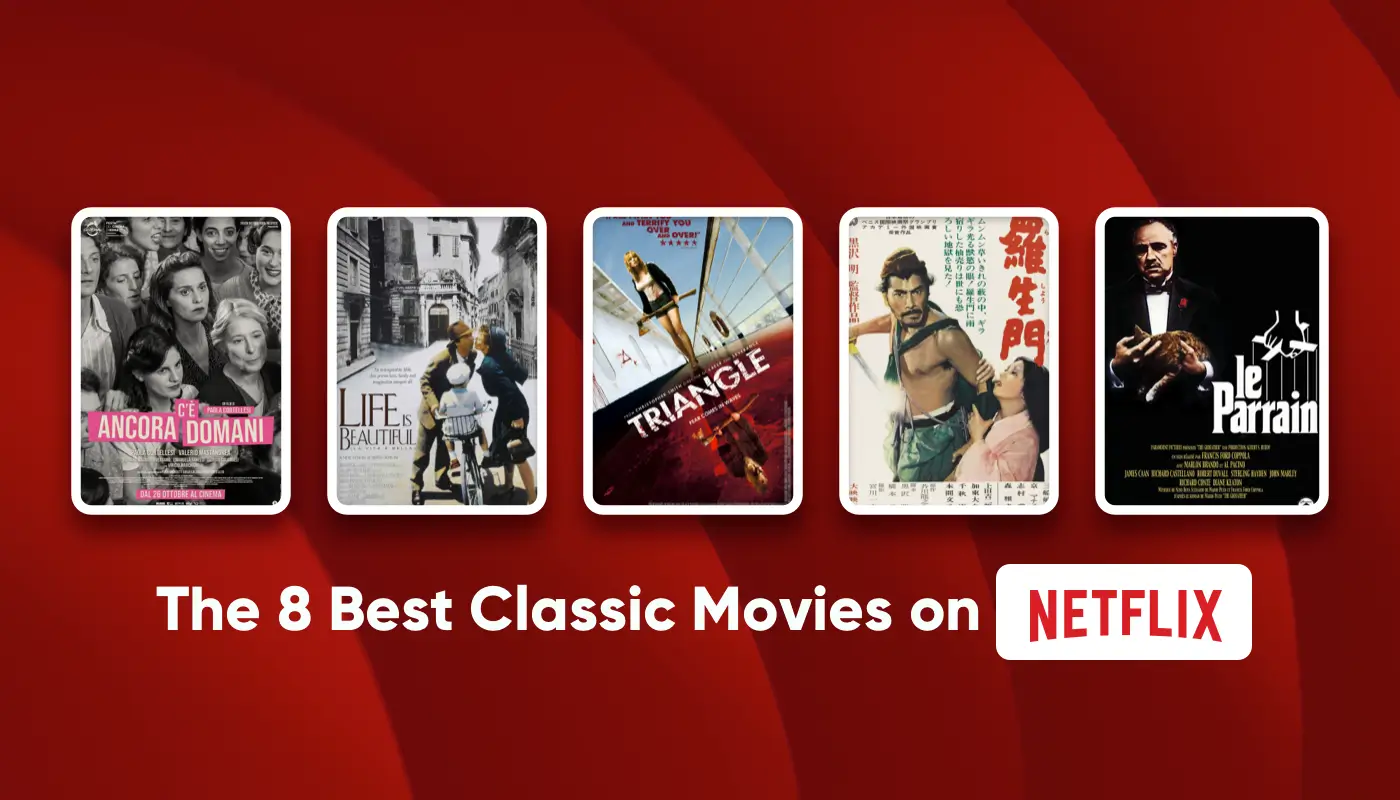
Beyond originals, Netflix offers comprehensive genre coverage, creating a mature content ecosystem. You can dive into heart-pounding thrillers, laugh along with the best comedies, or revisit cinema history with must-watch classic movies alongside action, crime, sci-fi, and mystery titles. In 2026, Netflix entered sports streaming with exclusive U.S. rights to WWE RAW, further expanding its content pool.
Netflix also excels in documentaries and animation, from the viral Tiger King to award-sweeping titles like Arcane and Love, Death & Robots, demonstrating sustained investment in non-scripted content.
For families, Netflix features the complete Studio Ghibli collection (in select regions), deep partnerships with DreamWorks and Cocomelon, and content that appeals to everyone from cinephiles to preschoolers.
Prime Video's Edge: Scale and Sports
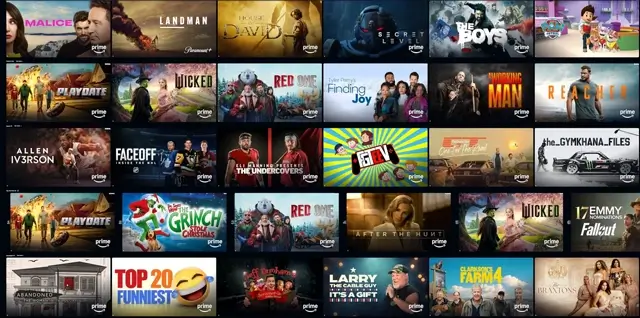
Prime Video's strength lies in content volume and catalog depth.
After acquiring MGM, classics like the James Bond and Rocky franchises joined Prime's library, significantly boosting its movie collection's size and quality. While Prime started later in originals, it's growing rapidly with hits like The Marvelous Mrs. Maisel, The Boys, The Lord of the Rings: The Rings of Power, spin-offs like Gen V, and original films such as The Idea of You and Sound of Metal.
Licensed content is another Prime advantage. Thanks to partnerships with Viacom, the platform excels in Comedy Central programming and Nickelodeon kids' shows (like Dora the Explorer)—ideal for families with children.
Sports streaming is Prime's killer feature. As an early adopter of live sports, Prime offers NFL Thursday Night Football (free for Prime members), AEW wrestling, and NBA coverage (2026–27), making it essential for sports fans. However, if you are looking for ways to watch football live free without a subscription, check out our guide for alternatives.
Netflix vs. Prime Video: Video Quality Comparison
When it comes to video quality, Netflix uses tiered pricing to gate premium picture quality, while Prime Video includes 4K as standard across all plans. Here's how they differ in encoding, HDR support, and color management:
| Netflix | Prime Video | |
| 4K HDR Access | High barrier: Premium plan only ($24.99/month) | No barrier: All plans include 4K ($8.99/month+) |
| Encoding Stability | Highly stable: Uses AV1 codec for cleaner images, minimal noise in dark scenes, fast buffering | Variable: Peak bitrate reaches 25Mbps, but prone to banding in dark scenes |
| HDR Format | Primarily Dolby Vision (HDR10 compatible) | Primarily HDR10+ (HDR10 compatible, some Dolby Vision) |
| Color Grading | Industry-standard: Strict mastering process, consistent color across titles | Inconsistent: Some older titles show oversaturation or brightness mapping issues |
| Best Device Match | LG OLED, Sony TVs (Dolby Vision support) | Samsung TVs (native HDR10+ support) |
Netflix delivers superior encoding optimization and color consistency, with stable picture quality across different scenes—ideal for viewers sensitive to dark detail and shadow rendering.
Prime Video offers theoretical advantages in peak bitrate but actual viewing experience can vary due to encoding efficiency. It's better suited for budget-conscious viewers who want 4K without paying premium prices.
Netflix vs. Prime Video: Audio Performance Comparison
Audio quality isn't just about format support—it's also about mixing balance and device compatibility. Here's how Netflix and Prime Video compare in dialogue clarity, Dolby Atmos rendering, and headphone experience:
| Netflix | Prime Video | |
| Mixing Balance | Dialogue-first: Clear vocals, standardized dynamic range (-24 LUFS), minimal volume adjustments needed | Excessive dynamic range: Background audio often overpowers dialogue, especially in licensed content |
| Dolby Atmos Effect | Impressive: Precise height channel positioning, solid bass, 700+ titles with Atmos support | Mediocre: Some titles feel closer to 5.1 surround with weak immersion, fewer Atmos titles |
| Headphone Experience | Spatial audio: Supports Sennheiser Spatial Audio for simulated surround on regular headphones | Standard stereo: No specialized optimization, relies on device's built-in virtual sound |
| Decoding Stability | Rare frame drops or audio sync issues | Occasional Atmos fallback to 5.1 audio |
Netflix excels in mixing standardization, particularly in balancing dialogue and background audio, plus it supports spatial audio for headphones.
Prime Video's audio quality varies by source—some content has overly wide dynamic range that may require manual volume adjustments during viewing.
Netflix vs. Prime Video: User Experience Comparison
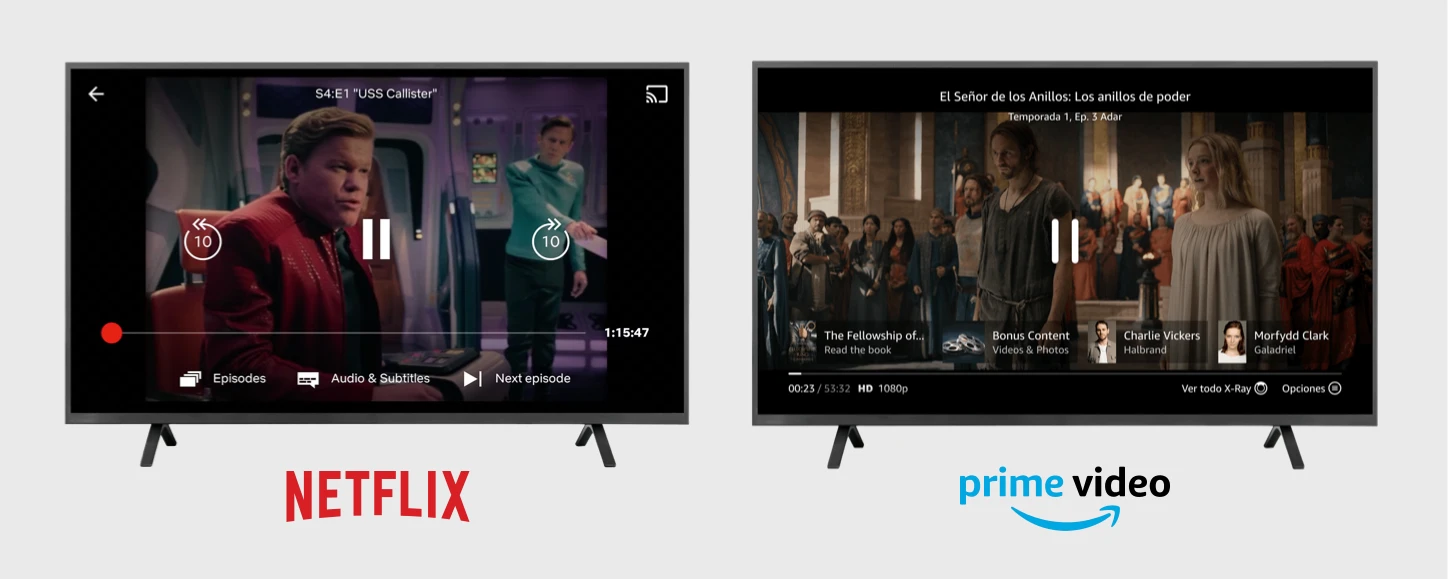
Netflix vs. Prime Video: Playback & Controls
Both platforms use horizontal-scrolling layouts with genre-based browsing, but differ in key ways.
1. Content Recommendations & Browsing
Netflix: Displays personalized "match scores" based on viewing history and thousands of micro-tags. Interface auto-plays muted trailers on hover with highly specific categories (e.g., "critically acclaimed mystery series" vs. generic "drama").
Prime Video: Blends streaming with digital storefront. Free content (Included with Prime) mixes with rentals/purchases, marked only by small icons (like yellow shopping bag)—requiring careful attention when browsing.
2. Player Features
Netflix: Seamless interaction with instant "Skip Intro" and auto-play next episode across all devices. Offers extensive subtitle customization (fonts, shadows, backgrounds) for multilingual viewers.
Prime Video: Standout X-Ray feature (IMDb-powered) displays real-time cast info, music tracks, and trivia when you pause—something Netflix lacks.
3. Quality & Data Controls
Netflix: Simple mobile quality settings—just "Standard" and "High"—with automatic bitrate adjustment for hassle-free streaming.
Prime Video: Granular manual controls with Good/Better/Best options showing exact data usage (e.g., 0.38GB/hour)—ideal for limited data plans or international travel.
Netflix vs. Prime Video: Ad-Supported Plans Comparison
Both platforms take different approaches to ads: Netflix offers it as a budget tier option, while Prime Video made ads the default experience.
Netflix introduced its ad-supported plan (Standard with Ads) in late 2022 as a lower-cost entry point at $7.99/month. Subscribers see approximately 4–5 minutes of unskippable ads per hour. However, Netflix's Standard and Premium tiers remain completely ad-free.
Prime Video began including ads by default starting in 2024. Even paying Prime members now see ad breaks (around 4 minutes per hour) during streaming. To remove ads, you must pay an additional $2.99/month on top of your existing membership fee.
Netflix vs. Prime Video: Device Compatibility & Performance
Both platforms support major hardware ecosystems including smart TVs (WebOS, Tizen, Android TV), gaming consoles (PS4/5, Xbox), streaming devices (Apple TV, Roku), and mobile devices, but differ in performance optimization and PC limitations.However, while standard consoles are fully supported, you will need specific workarounds to watch Netflix on Switch.
1. TV Performance
Netflix: "Netflix Recommended TV" certification ensures fast app loading and smooth menu navigation, even on mid-range models that pass performance testing.
Prime Video: Best performance on Fire TV Stick/Cube with fast startup and smooth navigation. Older non-Fire OS smart TVs or Android boxes may experience occasional menu lag.
2. Weak Network Performance
Netflix: Open Connect network prioritizes uninterrupted playback by automatically resolution during unstable connections—minimizing buffering.
Prime Video: Pauses to buffer when bandwidth drops to maintain quality, leading to more frequent stuttering on weak networks.
3. PC Quality Restrictions
Netflix: Supports 4K on Windows (Edge) and macOS (Safari) with HDCP 2.2-compatible devices—straightforward high-quality viewing.This stability is ideal if you are looking to learn how to stream Netflix on Discord for virtual movie nights with friends.
Prime Video: Strict browser restrictions—Chrome and Firefox max out at 720p-1080p. For 4K on PC, you must download the dedicated Windows app.
Netflix vs. Prime Video: Kids Options and Parental Controls
Both platforms offer kids modes, but with different approaches.
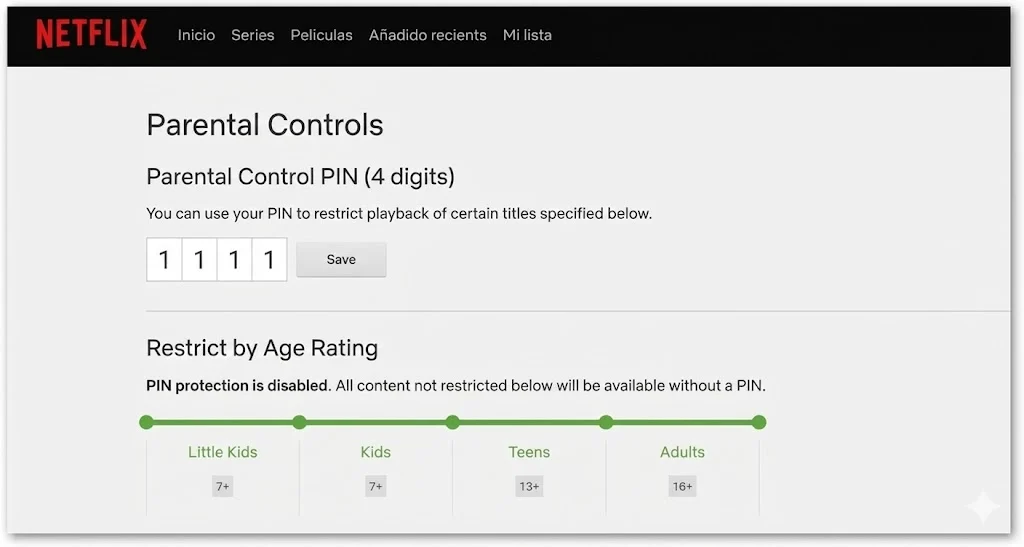
Netflix provides Kids Profiles that automatically filter adult content, simplify the interface to show only age-appropriate titles, and hide settings. Parents can use PIN codes to lock adult profiles and set content rating restrictions.
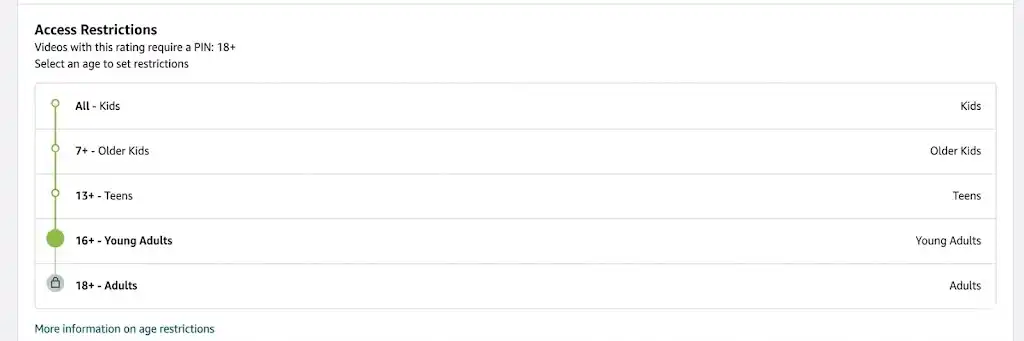
Prime Video offers more granular Parental Controls, letting parents set age ratings, restrict purchases, and use PINs to control access to restricted content or profile switching—ideal for families wanting stricter management.
If you prioritize premium quality and seamless performance, choose Netflix Premium. If you want high-quality streaming at lower cost and can tolerate ads (or pay $2.99 to remove them), Prime Video offers better value.
Netflix vs. Prime Video: User Reviews
Let's look at some Reddit comments to understand the general consensus on the "Netflix vs. Amazon Prime" debate.
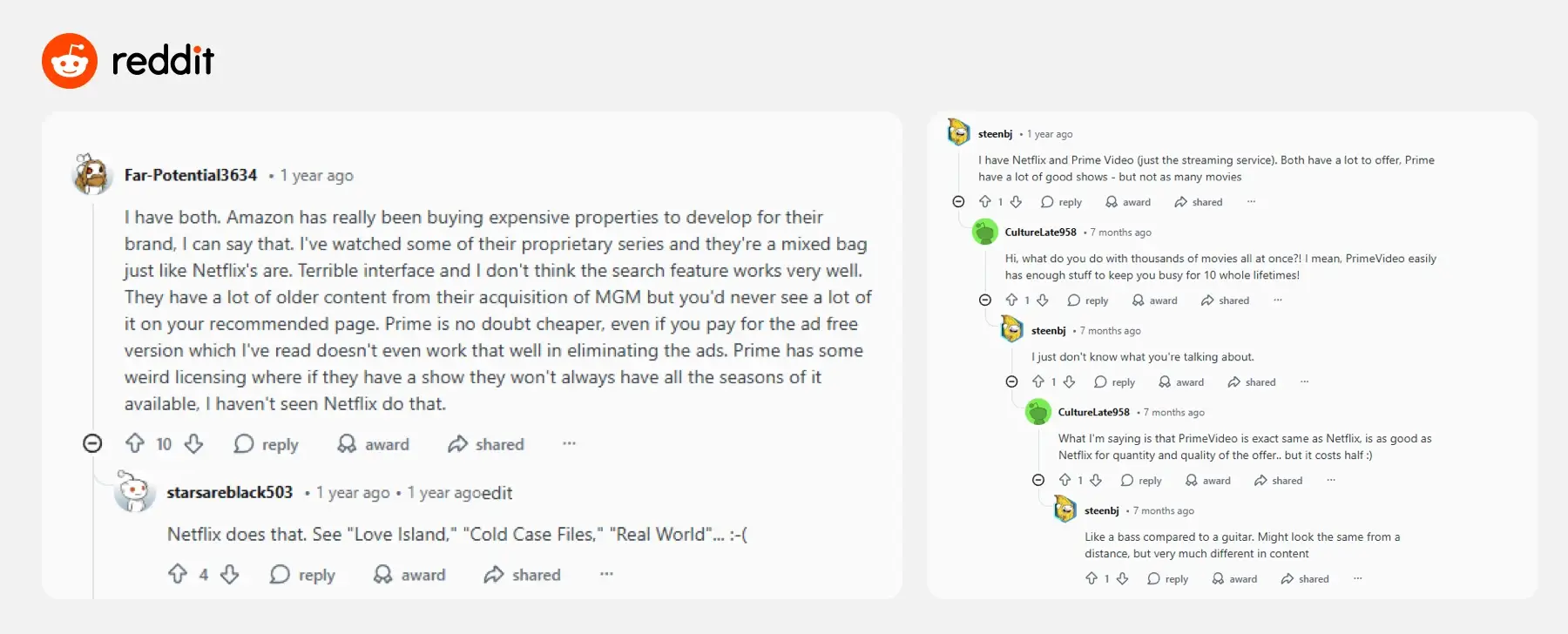
While many users acknowledge that both Netflix and Amazon Prime have their strengths, overall sentiment tends to favor Netflix over Prime—primarily due to Netflix's superior content lineup and more polished user interface.
Netflix vs. Prime Video: Which Is Worth Subscribing?
Netflix Pros & Cons Pros ✅
Cons ❌
|
Prime Video Pros & Cons Pros ✅
Cons ❌
|
After detailed comparison, Netflix suits users who love original series and premium content quality. Prime Video suits budget-conscious viewers who value multi-device streaming.
My Recommendation: Subscribe to Netflix via GamsGo
Here's why:
- Content quality: Netflix's original lineup is unmatched, with new hits almost every month
- User experience: Precise recommendations, smooth interface, thoughtful details
- Cost advantage: Get Netflix Premium through GamsGo with up to 70% off
🎉 Ultimate Solution
For serious streaming fans, both platforms complement each other perfectly. Subscribe to Netflix Premium + Prime Video through GamsGo for under $15/month—covering nearly all top content, far below Netflix's official Premium price ($24.99).
Better yet, GamsGo offers HBO Max, Crunchyroll, YouTube Premium, and more streaming services—giving you multiple platforms for the price of one. Movies, series, sports, variety shows—all at discounted rates.
FAQ
Which is better Netflix or Amazon Prime Video?
Netflix is the better choice for users who prioritize consistent quality, premium audio, and top-tier originals. Prime Video is better for cost-conscious viewers who want easy 4K/HDR access and already have Amazon Prime. Many households subscribe to both—Netflix for quality, Prime for value and variety.
Is Netflix worth paying for?
Yes—if you care about consistent 4K/HDR quality, strong Dolby Atmos performance, and top-tier original series. Netflix delivers stable encoding, polished mixing, and the industry’s most reliable viewing experience across TVs, headphones, and home-theater systems. If you value picture accuracy, clear dialogue, and high-quality originals, the subscription is worth it.
Should I be paying for Prime Video if I have Amazon Prime?
If you’re already an Amazon Prime member, then Prime Video is effectively included at no extra cost. It’s especially worth using if you want broad 4K/HDR access without paying for a higher tier, or if you use a Samsung TV that benefits from HDR10+. However, note that audio quality and consistency can vary depending on the title.
Related Articles
How to Get Disney Plus for Free in 2026