Struggling with TeamViewer's lag, dropped sessions, or climbing licence fees? You're not alone. As prices rise and users flag stability and security concerns, the hunt for a solid TeamViewer alternative—free or paid—has never been busier.
Over 15 days I put the most popular remote desktop tools through real work: fieldwork on a tablet, office document runs, multi-device support sessions, and long-distance connections.
Below are the 10 best alternatives to TeamViewer, from fully free picks for personal use to enterprise-grade platforms, plus one open-source bonus. Whatever your budget, there's a fit here.

Why users are switching from TeamViewer in 2026
TeamViewer is powerful, but for most people it's become more than they need—and more than they want to pay for. Three things keep pushing users out the door.
First, cost. Commercial licences and add-ons have climbed year after year, and the pricing structure—paying separately for seats, concurrent connections, and features like mobile support—makes the final bill hard to predict. For a solo user or small team, that's a lot to swallow for capability you may never touch.
Second, stability. Lag and sudden disconnects are the fastest way to kill a work session, and they show up most on the long-distance connections remote tools exist to handle.
Third, security scrutiny. Remote access touches sensitive data, and after several high-profile incidents across the industry, teams now expect end-to-end encryption, granular permissions, and session auditing as standard—not as a premium upsell.
How to choose a TeamViewer alternative
Before the list, here's what I weighted most heavily while testing—use it as your own shortlist filter:
- Reasonable pricing: flexible billing and a genuine free tier, so you pay only for what you actually use rather than a bundled enterprise package.
- Focused features: smooth control, quick file transfer, and a mobile experience that doesn't fall apart—minus the bloat most users never open.
- Reliable performance: low latency and stable sessions whether you're across town or across continents.
- Strong security: end-to-end encryption plus clear access controls. On remote tools, these aren't optional.
TeamViewer alternatives compared at a glance
| Tool | Best for | Free plan | Starting price | Key platforms |
|---|---|---|---|---|
| Avica | Best overall / value | Yes | From $79/year | Win, Mac, iOS, Android |
| Chrome Remote Desktop | Best free option | Yes (fully free) | Free | Browser-based |
| AnyDesk | Fastest, lightweight | Free (personal) | From ~$14.9/mo | Win, Mac, Linux, mobile |
| Splashtop | Mobile / design work | Yes | From $8.25/mo | Win, Mac, iOS, Android |
| RemotePC | Budget multi-device | Trial | From $15/mo | Win, Mac, Linux, mobile |
| Zoho Assist | Zoho users | Yes | From $15/mo | Win, Mac, Linux |
| GoToMyPC | Simple office access | Trial | From $29.05/mo | Win, Mac |
| ConnectWise Control | Self-hosted IT support | Trial | From ~$45/mo | Win, Mac, Linux |
| BeyondTrust | Enterprise / auditing | No | Custom quote | Win, Mac, Linux |
| Webex Access | Cisco environments | No | Custom quote | Desktop-first |
The 10 best TeamViewer alternatives (free and paid)
Avica — Best overall TeamViewer alternative
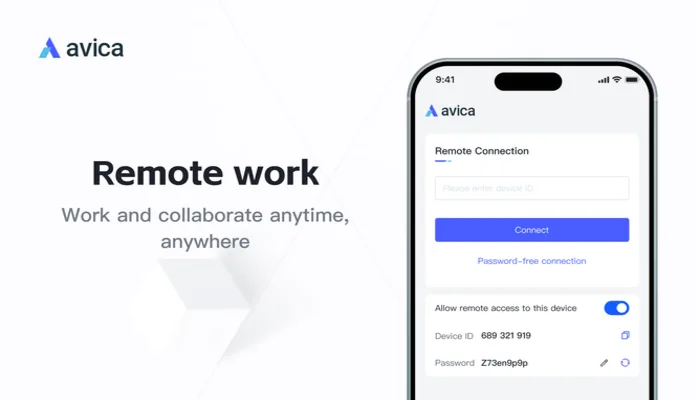
As a heavy remote-desktop user, I care about two things: responsiveness and security. Those are exactly where TeamViewer wore me down, with sluggish control and sessions that dropped mid-task.
Avica turned that around. Connections felt instant, with frame rates up to 144 FPS and latency as low as 10 ms, and it held that smoothness even under load—the kind of consistency that matters when you're editing a file or running a live demo.
On the security side it uses end-to-end AES-256 encryption, a transparent permission system, and full session logging, which solved the murky access-control problem I had with TeamViewer.
Pricing starts at $79/year—roughly a third of TeamViewer's cost—with a free tier to start on. If you want the full premium version for less, you can unlock Avica's complete feature set at a fraction of the official price on GamsGo, with no difference in functionality. Here's the quickest way to get Avica premium for a fraction of the price.
Best for: almost anyone who wants premium performance without premium pricing.
Not ideal if: you need on-premises self-hosting.
| ✓ Pros | ✗ Cons |
|---|---|
| Ultra-low latency, up to 144 FPS | No self-hosted deployment |
| AES-256 encryption and session logging | Smaller brand footprint than TeamViewer |
| Generous free tier, affordable paid plans |
Chrome Remote Desktop — Best free TeamViewer alternative
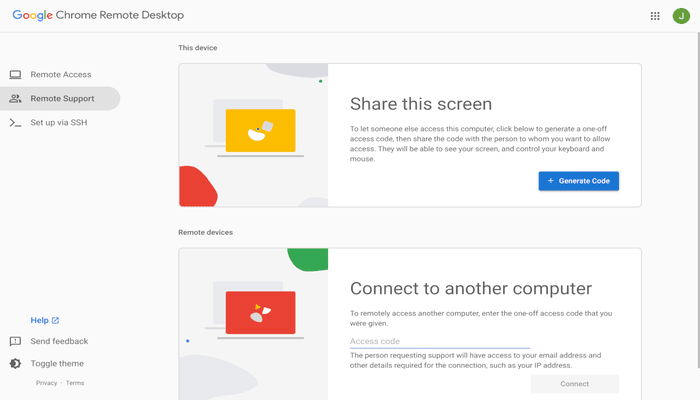
If you only need occasional access—or to bail out a family member's laptop—Chrome Remote Desktop is the simplest free pick I tested. It's completely free with no time limits, no device caps, and none of the "your session will end soon" nags that plague free tiers elsewhere.
Setup is a few clicks inside Chrome, no technical know-how required, which is exactly why I hand it to non-technical people. The catch is scope: it does the basics and nothing more. No file transfer, no voice, no printing, no multi-user. For quick personal access it's excellent; for real support work it runs out of road fast.
Best for: casual personal use.
Not ideal if: you need file transfer or team features.
| ✓ Pros | ✗ Cons |
|---|---|
| Genuinely free, no session limits | No file transfer or printing |
| Dead-simple setup in Chrome | No voice or multi-user support |
| Cross-platform through the browser | Basics only, not for support work |
AnyDesk — Fastest lightweight alternative
AnyDesk is the lightest tool on this list—it launches in seconds and often needs no install at all, which makes it my go-to for one-off, ad-hoc sessions.
Speed is the headline. Its proprietary DeskRT codec kept latency under 16 ms on local networks, and I got consistently smooth control across everything from a low-end laptop to a phone tethered on a mobile hotspot. What it doesn't have is the management layer: no centralised device console, no real team collaboration. That ceiling is fine for a freelancer, limiting for a growing IT team.
Best for: freelancers and small teams who want fast, no-setup access.
Not ideal if: you're managing a fleet of endpoints.
| ✓ Pros | ✗ Cons |
|---|---|
| Extremely lightweight, near-instant connections | Weak centralised management |
| Reliable even on weak networks | Limited collaboration tools |
| Free for personal use | Not built for large organisations |
Splashtop — Best for mobile and design work
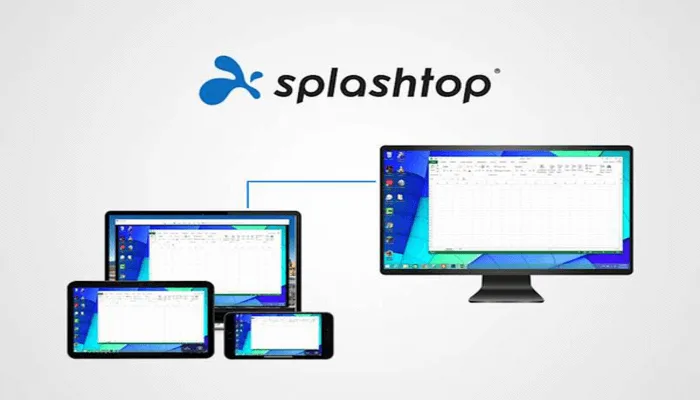
I regularly tweak design files in the field, and most tools feel clumsy the moment you're doing it from a tablet. Splashtop was the exception. It handles high-precision touch gestures—drag, zoom, mark—so I could adjust layers and edit directly from a phone without fighting the interface.
It also outclasses TeamViewer on media: crisp 4K streaming with minimal lag and audio routed to your local device, which is a real difference for designers and video editors. The weak spot is collaboration—no built-in meetings, voice calls, or multi-user sharing—so it's a solo-work tool at heart. For visual work on the go, though, nothing here beat it.
Best for: mobile design and editing.
Not ideal if: you rely on remote meetings or team sessions.
| ✓ Pros | ✗ Cons |
|---|---|
| Excellent high-precision touch controls | No built-in meetings or voice calls |
| Crisp 4K streaming with local audio | No multi-user collaboration |
| Low price of entry | Solo-work focus |
RemotePC — Best budget multi-device option
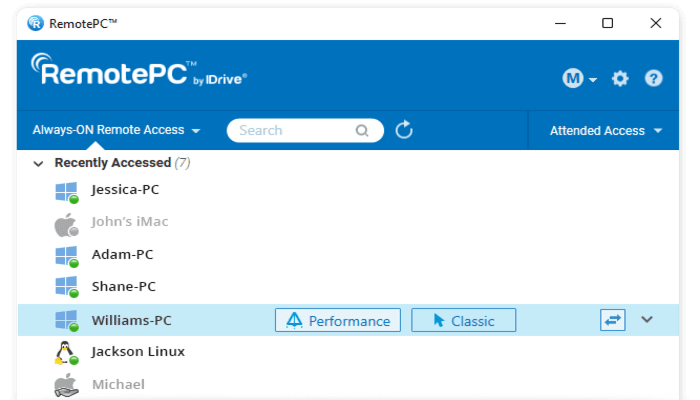
RemotePC earned its spot the moment I needed to jump between several machines without a punishing subscription. Even on the basic plan it lets you control multiple devices—home PC, work computer, a friend's machine—and switching between them mid-session was quick and clean.
The trade-off is familiar: it skips collaboration extras like meetings, voice, and multi-user control, so it's not built for presentations or training. But as a straightforward, affordable way to reach all your devices, it punches above its price.
Best for: individuals and small teams juggling several machines on a budget.
Not ideal if: you need training or presentation features.
| ✓ Pros | ✗ Cons |
|---|---|
| Multi-device access on entry plans | No meetings or multi-user collaboration |
| Low cost, quick device switching | Not for presentations or training |
| Broad platform support | Annual billing |
Zoho Assist — Best for Zoho users
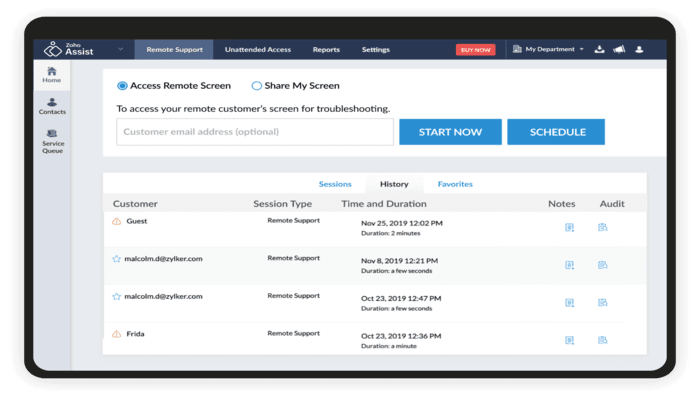
If your team already lives in Zoho, Zoho Assist makes remote support almost frictionless. It hooks straight into Zoho's ticketing system—I could launch a session in one click from a ticket, with customer details and activity logs syncing automatically, so there was no jumping between tabs.
Customers install nothing; they click a link or type a PIN and you're in, which is ideal for unplanned support. Outside that lane it's more limited than TeamViewer—remote meetings, centralised device management, and cross-platform file transfer are basic—but for support pros inside the Zoho ecosystem it feels native.
Best for: support teams already using Zoho.
Not ideal if: you need heavy device management outside Zoho.
| ✓ Pros | ✗ Cons |
|---|---|
| Deep Zoho ticketing integration | Limited remote meetings |
| No client install for customers | Basic centralised management |
| Fast, one-click session start | Less useful outside Zoho |
GoToMyPC — Best for simple office access
GoToMyPC is the definition of stable and boring, in the best way. If you just need to reach your office computer for routine tasks, it does that without drama. In testing it ran Word, Excel, and an ERP system with almost no lag, and remote printing let me send files straight to a local printer instead of shuffling them around.
The limitation is the billing model: it's per device, so accessing several machines means buying a licence for each, which adds up fast. Light on features, but genuinely dependable for what it targets.
Best for: reliably reaching one office machine.
Not ideal if: you need access to many devices.
| ✓ Pros | ✗ Cons |
|---|---|
| Rock-solid stability | Per-device pricing gets expensive |
| Smooth with office apps | Thin feature set |
| Handy remote printing | Not for multi-device access |
ConnectWise Control — Best self-hosted option
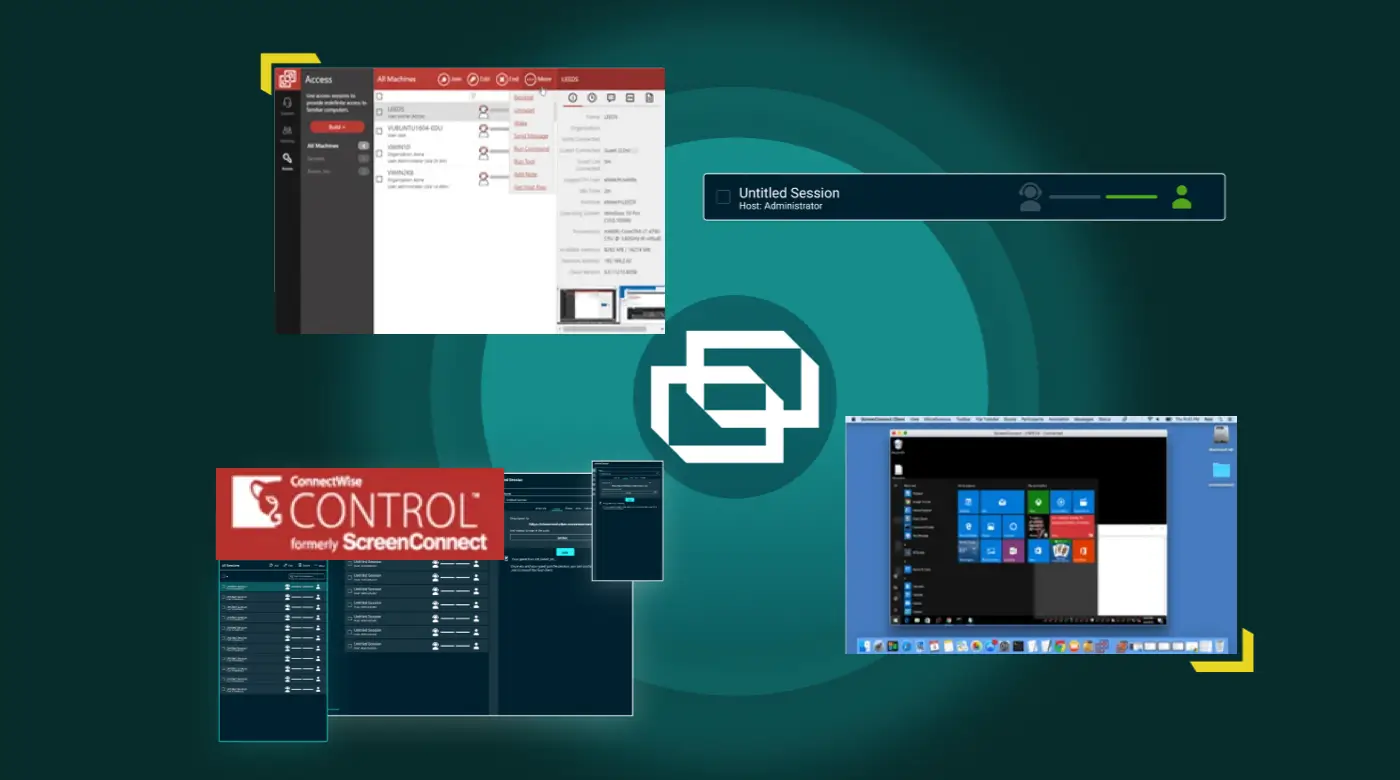
ConnectWise Control is a strong pick for IT teams that want their data to stay on their own turf. It supports self-hosted deployment on your own servers, so you're not leaning on a third-party cloud. It also integrated cleanly with the ticketing and authentication tools I was already running, and its APIs and Webhooks made automating routine workflows straightforward.
The interface is powerful but not intuitive—expect to spend your first session reading docs rather than working. Push through that curve and you get a secure, highly customisable support platform.
Best for: IT teams needing self-hosting and automation.
Not ideal if: you want something you can run in five minutes.
| ✓ Pros | ✗ Cons |
|---|---|
| Self-hosted data control | Steep learning curve |
| Strong ticketing and auth integrations | Dated interface |
| API and Webhook automation | Overkill for casual use |
BeyondTrust — Best for enterprise IT and auditing
For IT support and technical operations, BeyondTrust was the most security-serious tool I tested. It supports local deployment, strong authentication, full session video recording, and permissions granular enough to define exactly who can access which client—the kind of control audit-heavy enterprises actually need, and something TeamViewer handles less rigorously.
It also lets multiple technicians work in one session, so one person can drive while another checks logs or runs scripts. The cost is complexity: first-run setup means reading documentation, configuring permissions, and binding a directory service. Not beginner-friendly, but worth it for centralised control and real auditing.
Best for: enterprises with strict security and audit requirements.
Not ideal if: you want quick, casual access.
| ✓ Pros | ✗ Cons |
|---|---|
| Local deployment and strong authentication | Complex first-run setup |
| Full session recording, granular permissions | Overkill for individuals |
| Multi-technician sessions | Steeper learning curve than TeamViewer |
Webex Access — Best for Cisco environments

Webex Access is built for security-conscious companies already invested in Cisco. Every login runs the gauntlet—identity verification, device checks, access approval—before you're in, which does give real peace of mind. And if you already run Webex Meetings or Cisco network gear, the integration is seamless, with no extra configuration to wire up.
Mobile is where it stumbles. It's desktop-first, and mobile controls are limited, which gets frustrating if you work on the move. Inside a Cisco stack, though, it delivers on security and fits right in.
Best for: Cisco-based, security-first organisations.
Not ideal if: you need strong mobile control.
| ✓ Pros | ✗ Cons |
|---|---|
| Rigorous access verification | Weak mobile experience |
| Seamless Cisco integration | Best only within the Cisco ecosystem |
| Enterprise-grade security | Desktop-first design |
Which TeamViewer alternative should you choose?
Quick picks, depending on what you actually need:
- Best overall value: Avica
- Best free: Chrome Remote Desktop
- Fastest and lightest: AnyDesk
- Mobile and design work: Splashtop
- Enterprise IT and auditing: BeyondTrust or ConnectWise Control
- Open-source and self-hosted: RustDesk
Across all 10 I tested, Avica was the best all-rounder: 4K at 60 FPS, ultra-low latency, end-to-end encryption, and flexible pricing that includes a free tier. For design, modelling, or anything that demands sharp visuals and real-time response, it's the one I'd reach for first.
And if you want that premium experience without the premium invoice, you can pick up an affordable Avica premium subscription on GamsGo—trusted by over 10 million users across 150+ countries—and be working remotely in minutes.
FAQs
What is the best free alternative to TeamViewer?
For fully free personal use, Chrome Remote Desktop is the easiest—no time limits or device caps, just a browser. If you want more capability on a free tier, Avica and Splashtop both offer solid free plans alongside their paid versions.
Is there a completely free TeamViewer replacement for commercial use?
Most free tiers, including TeamViewer's own, restrict commercial use. Chrome Remote Desktop covers personal tasks for free, and RustDesk is free and open-source for technical users. For dependable business use, a paid plan from Avica or Splashtop usually gives the best value.
What is a good open-source TeamViewer equivalent?
RustDesk is the most active open-source option. The client is free and auditable, and you can self-host the relay server for full data control, though advanced features require its paid Server Pro tier.
What can I use instead of TeamViewer that's cheaper?
Avica starts at roughly a third of TeamViewer's cost, and Splashtop's paid plans begin around $8.25/month. You can lower the cost of a premium plan further through a shared-subscription platform like GamsGo.
TeamViewer vs LogMeIn — which is better?
LogMeIn leans toward small-business remote access with a higher entry price, while TeamViewer covers a broader feature set. If both feel too expensive, lighter picks like Avica or AnyDesk deliver the core remote-control experience for far less.
TeamViewer vs Chrome Remote Desktop — what's the difference?
Chrome Remote Desktop is free and browser-based but basic—no file transfer or team features. TeamViewer is far more capable but paid. For occasional personal access, Chrome wins on simplicity; for real work, a paid alternative is the better fit.
Is there a time limit on TeamViewer for free?
TeamViewer's free tier often imposes session time limits that interrupt longer tasks. Alternatives such as Avica allow uninterrupted remote access with no session cut-offs.
What is a safer alternative to TeamViewer?
Tools with end-to-end encryption, granular permissions, and session auditing—like Avica, BeyondTrust, and Webex Access—give you tighter control over exactly who accesses what.
Related Articles